Wednesday, 13 July 2016

Warner Bros. paid YouTubers for positive game reviews


It apparently paid PewDiePie and other YouTubers for good reviews of 'Shadow of Mordor.'

Warner Bros. has settled an FTC complaint accusing the company of paying YouTubers "hundreds to tens of thousands of dollars" to make positive review videos for Middle Earth: Shadow of Mordor. FTC filed the complaint back in 2014, after the studio ran an online marketing campaign for the game. According to the the commission, Warner Bros. required (PDF) the online influencers they hired to make a video that "promote[s] positive sentiment about" Shadow of Mordor. That video should "not show bugs or glitches that may exist" and should "not communicate negative sentiment" about Warner Bros. These influencers also had to promote their videos on Facebook and Twitter. The commission didn't release a list of the YouTubers the studio paid, but it did name PewDiePie as one of them. Since those influencers received payment for videos praising the game, their creations are classified as sponsored content.
/
That wouldn't have been a problem if they disclosed it, but the FTC says the company didn't require them to do so within the video itself. Warner Bros. only instructed them to place disclosures in their videos' description boxed, and most of the time, you can only see the entirety of what's written in there by clicking "Show More." In PewDiePie's case, you'll see a line that says "This video was sponsored by Warner Brother" when you view the video's whole description. Some of the reviewers didn't even say that their videos were sponsored, only that they received a free copy of the game. In all, the paid reviews raked in 5.5 million views, 3.7 million of which came from PewDiePie, who has over 46 million subscribers.
It's worth noting that Shadow of Mordor was well-received and won eight out of the nine DICE awards it was nominated for. Warner Bros. probably didn't even need to pay people to get good reviews. If you're wondering what kind of penalty the company got, well, let's just say it got off real easy. The commission only wants the studio to make sure the influencers it hires clearly and conspicuously disclose that they received payment from Warner Bros in the future. It also has to review those videos for compliance and withhold payment if they don't contain the proper disclosure stating their status as sponsored content.

thanks................

Behind Facebook's efforts to make its site accessible to all


Earlier this year, Facebook launched a new feature for iOS screen readers called automatic alt text. Powered by artificial intelligence and machine learning, it recognizes the objects in a photo and then describes them, which is incredibly handy for users who are blind. It arrived on Android soon after, and two weeks ago, the social network officially made the tool available in 20 other languages. These are just a few recent examples of how Facebook is attempting to make its products -- as well as the internet as a whole -- more accessible to those with disabilities. It all started five years ago when Jeff Wieland, who worked on the company's user research team at the time, discovered that there were people with disabilities who were having a rather terrible experience with Facebook.
For example, he found out that screen readers -- software employed by blind users to know what's happening on a page -- would interpret a button on a site as simply, well, "button." It would have no information on what the button does. "This is a really simple example," he said. "For an engineer, adding a label to a button is one line of code. But it changes everything." The problem, he said, was that developers were not designing the web experience with screen readers in mind. It seems like a "No, duh" explanation, but as Wieland told me, accessibility is not a subject that's often taught in computer science classes. "It's not part of the core curriculum. You have people graduating from great programs, but who have no exposure to accessibility. It's a real tragedy." Indeed, he said that almost all incoming engineers have no prior exposure to the subject. The community that needs this tech is a large one. According to the World Health Organization, about 285 million people worldwide are visually impaired, and of those, around 39 million are fully blind. And that's just those who suffer from vision loss. "Accessibility is about more than that; it's about serving those who have varying ability," said Wieland. "I discovered there was this vast community we were underserving." In response to this, Wieland set about creating an accessibility team at Facebook with the company's blessing. "Philosophically, people got it," he said, adding that the goal aligns with Facebook's mission for connecting the world. "But the big question was, how do we do this?" Over the years, the team has worked to raise awareness of accessibility issues and assistive technologies within the company.
It started out with two people, but now it's grown to more than 20. It's a cross-functional group made up of people in design, user research, data science, operations and more. Remember those unlabeled buttons? Now, Wieland said, that's a mostly solved issue (though, given the scale of Facebook, there are probably still a few unlabeled ones here and there). The key factor? Working with existing teams on Facebook to integrate accessibility across the board. That automatic alt text photo captioning, for example, required the assistance of Facebook's artificial intelligence team.
"There's this concept of alt text for photos, which used to be provided by the site owner or web developer," said Wieland. "But now the internet is all photos ... The only way we could really provide the text for photos at our scale, would be to use computers to do this." Fortunately, Facebook's AI team had been working on computer vision for at least a year and a half already and had the technology and expertise to work on the project. According to Crista Earl, the director of Web Services for the American Foundation for the Blind, most sites have incorrect or poorly designed forms. "For example, when trying to book a flight on a travel site ... the manner of selecting choices poses an obstacle to users of assistive technology." Inadequately labeled videos and images are also a problem. Other common issues are low-contrast images and tiny fonts for those with low vision. "During my experience online with accessibility issues, I have struggled with a lot of different things," said Kevin Cao, a visually impaired tech support employee for the New York Institute for Special Education. Examples include the lack of voice descriptions for images and text. A few of his favorite sites are YouTube and Applevis.com, a community website for low-vision Apple users, which he said have "clear label buttons, links and heading recognition." As for how he thinks Facebook is doing, he believes it's good for now but could use improvement. "I would like to add more picture descriptions with faces, people," he said. That's the same feedback Wieland heard as well. "They want to know what a person's hair is like, et cetera.
A human can describe a full context, but we're just returning a list of objects ... Hopefully in the future we can tell a richer narrative." Facebook's work on accessibility encompasses more than just vision loss. Back in 2014, the company added the ability for users to provide closed captions to videos. It's currently working on a more automated captioning system with the help of Facebook's language-and-speech-technology group. "The real lion's share work that we do is to prepare our teams to write and design applications that are accessible, to make it foundational," said Wieland. "We want to embed accessibility into all of the steps along the way, from ideation to actually shipping the product." To help this along, Facebook has now integrated accessibility to the QA process that Wieland says has been useful. "It helps push accessibility earlier in the process, without waiting to hear user feedback." As part of the education process, the accessibility team has done a lot internally to raise awareness of the issue.
There's an Empathy Lab located in the middle of the Facebook campus that's partially designed to simulate disabilities to engineers and developers. On display are assistive technologies such as a Braille display for phones, a computer that uses eye tracking for control as well as screen-reading software. "It allows them to play with some of the technologies that people use day in and day out," said Wieland. "It makes it feel real and close to home."

Thanks..........

Tuesday, 12 July 2016

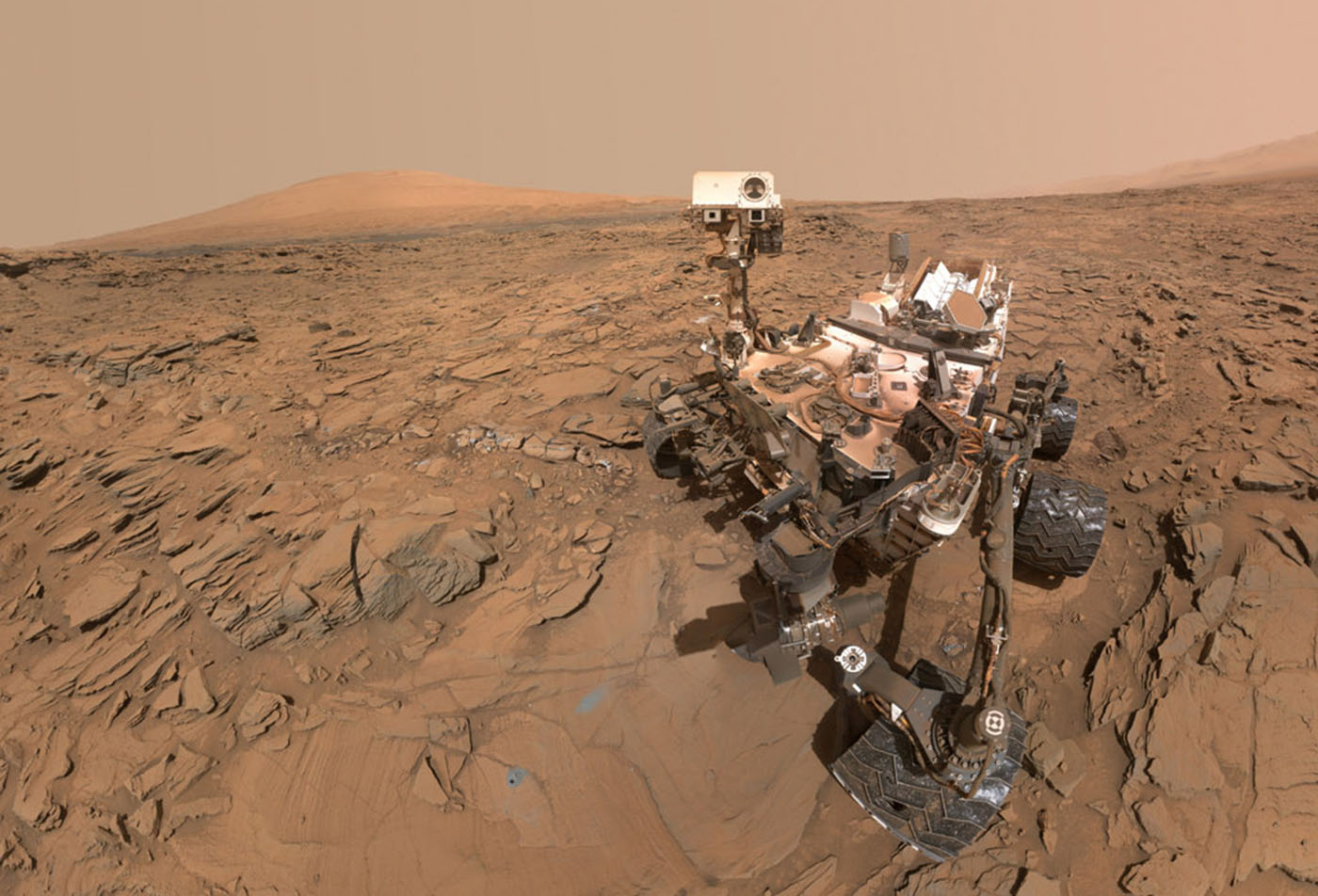
Curiosity awakens from nap to resume full operations


Curiosity is back to work on Mars after it shut itself down due to a software glitch on July 2nd. Even though tech support for the rover is nearly 60 million miles away, NASA scientists weren't too worried about the issue.
As suspected, the cause was found to be a "software mismatch in one mode of how image data are transferred on board." However, other means are available to transmit image data, so the team powered up the rover on July 9th and will simply avoid using the problematic mode.
Curiosity has gone into safe mode several times before, all back in 2013. However, the previous glitches were more serious, as NASA actually had to restore its software systems from a backup. The mission was recently extended for two years to let the robot make more breathtaking discoveries and hopefully even spot some water. It could be extended even further, but it's hard to say whether we'll get Opportunity-like endurance out of Curiosity. The nuclear-powered robot's plutonium-238 power supply could last up to 15 years, but it's likely that its batteries or other parts will break down first. Many scientists think that if it's still going when the Mars 2020 rover arrives on the red planet, that would be a great outcome.

Android Wear's Latest Preview Opens Gestures To Other Apps


Android Apps Developer Preview 2 is available for your smart-watch


Are you the sort to treat your wrist as a test bed for Google software? If so, today's a grand day. Google has released its second developer preview of Android Wear 2.0, and it packs more than just some extra spit and polish. It now supports wrist gestures in third-party apps, to start. While you'll need apps to take advantage of this, it raises hope that your favorite fitness or messaging tool won't require a free hand (or your voice) for navigation.


 Other upgrades are minor, unless you really, really like easier access to action and navigation drawers. However, the biggest gripe may simply be finding a device to use with the preview. The software-based emulator will work on a computer, but you'll need either a Huawei Watch or the LG Watch Urbane 2nd Edition LTE to try this beyond your PC. Otherwise, you'll have to wait until the fall to see what all the fuss is about.

Android Wear's Latest Preview Opens Gestures To Other Apps


Android Apps Developer Preview 2 is available for your smart-watch


Are you the sort to treat your wrist as a test bed for Google software? If so, today's a grand day. Google has released its second developer preview of Android Wear 2.0, and it packs more than just some extra spit and polish. It now supports wrist gestures in third-party apps, to start. While you'll need apps to take advantage of this, it raises hope that your favorite fitness or messaging tool won't require a free hand (or your voice) for navigation.


 Other upgrades are minor, unless you really, really like easier access to action and navigation drawers. However, the biggest gripe may simply be finding a device to use with the preview. The software-based emulator will work on a computer, but you'll need either a Huawei Watch or the LG Watch Urbane 2nd Edition LTE to try this beyond your PC. Otherwise, you'll have to wait until the fall to see what all the fuss is about.

Android Wear's Latest Preview Opens Gestures To Other Apps


Android Apps Developer Preview 2 is available for your smart-watch


Are you the sort to treat your wrist as a test bed for Google software? If so, today's a grand day. Google has released its second developer preview of Android Wear 2.0, and it packs more than just some extra spit and polish. It now supports wrist gestures in third-party apps, to start. While you'll need apps to take advantage of this, it raises hope that your favorite fitness or messaging tool won't require a free hand (or your voice) for navigation.


 Other upgrades are minor, unless you really, really like easier access to action and navigation drawers. However, the biggest gripe may simply be finding a device to use with the preview. The software-based emulator will work on a computer, but you'll need either a Huawei Watch or the LG Watch Urbane 2nd Edition LTE to try this beyond your PC. Otherwise, you'll have to wait until the fall to see what all the fuss is about.

NVIDIA's GTX 1070 is a mid-range GPU that feels high-end


NVIDIA's GTX 1070 It's more affordable than the flagship GTX 1080, and nearly as powerful.


As impressive as NVIDIA's GeForce GTX 1080 GPU is, its high price of $599 is tough to stomach for even the most dedicated gamers. That's where the mid-range GTX 1070 comes in: It's almost as fast as its more powerful sibling, but it starts at a more reasonable $379. That's still a hefty chunk of change, but for the money it can tackle pretty much every game today (and likely for the next year or two) without breaking much of a sweat. That's not too shabby for a mid-range video card.

Due to travel (Computex was quite the trip) as well as limited supply from NVIDIA, it's admittedly taken me a while to put the GTX 1070 through its paces. But now that I've had some time with it, I can say without a doubt that the 1070 is an intriguing GPU. Even NVIDIA admits that among this generation of cars, this is the one most consumers will likely end up going for. Rounding out the lineup, the company also announced the lower-end GTX 1060 this week, which is quite the bargain at $249. The GTX 1070 is NVIDIA's second card based on its 16 nanometer Pascal architecture, and it packs in 8GB of GDDR5 RAM and clock speeds between 1.5GHz and 1.7GHz. The company claims it pumps out 6.5 teraflops worth of computing power, compared with the 1080's nine teraflops.
I tested the slightly pricier $449 Founders Edition of the card, which sports the same elaborate metallic heatsink design as the 1080 Founders version. It has three DisplayPort connections, one HDMI port, one DVI port and is powered by a single eight-pin connector. Let's get to what you're really here for: benchmarks! Not surprisingly, the GTX 1070 sits right between AMD's $240 Radeon RX480 8GB card and the GTX 1080 in terms of performance on my rig (a 4GHz Core i7-4790K CPU, 16GB of 2400Mz DDR3 RAM and a 512GB Crucial MX100 SSD on a ASUS Z97-A motherboard). But it also consistently bests the Radeon R9 Fury X, which was AMD's flagship card from last year. (Unfortunately, I didn't have a GTX 970 or 980 Ti to benchmark.) Rather than pining for 60 fps 4K performance, I've settled on 1440p (2,560 by 1,440 pixels) as my ideal gaming resolution.


It's noticeably sharper than 1080p, and it's easy to get high frame rates even with every graphical nicety imaginable turned on. With the GTX 1070, I consistently reached 60 fps with ultra settings (which will still look pretty great on a 4K display). Of course, it also had no trouble scoring well in 1080p benchmarks, but that's no surprise. If you're getting a new GPU today, you're better off aiming for 1,440p performance.
       

 Given that AMD's cheaper RX 480 had no trouble with VR, I didn't expect any hiccups with the GTX 1070. Indeed, it didn't disappoint.

3DMark3DMark 11
NVIDIA GeForce GTX 1070Standard 13,918/ Extreme 7,703/ Ultra 4,110X7,778
NVIDIA GeForce GTX 1080Standard 15,859/ Extreme 9,316/ Ultra 5,021X9,423
AMD R9 Fury XStandard 13,337/ Extreme 7,249/ Ultra 3,899X,6457
AMD Radeon RX 480Standard 10,279/ Extreme 5,146/ Ultra 2,688X4,588

Dogfighting in Eve: Valkyrie was fast-paced and didn't show any sign of slowdown, and exploring alien environments in Oculus' Farlands felt as immersive as ever. In fact, I didn't notice any performance difference from the GTX 1080 with VR. When the GTX 1070 was announced, it seemed like the ideal affordable choice for PC gaming. Since then, though, we've seen the $200 AMD RX 480 debut, and NVIDIA announced the GTX 1060, a $249 option of its own. So where does that leave the 1070? Based on what I've seen so far, it's still a better option than the RX 480 and 1060 if you want to play at 1440p, or simply want a GPU that can handle next year's games. And, of course, you've also got the option of picking up another GTX 1070 to run in SLI mode in a year or so, as well as overclocking to get some extra performance free. It's hard to call a $379 video card affordable, but when you're comparing it to a $599-and-up card, it seems a lot more palatable. And when you put it in context, as a GPU that trounces the cream of the crop from last year, the GTX 1070 is undeniably a great value.