Showing posts with label space. Show all posts

Thursday, 14 July 2016

NASA investigating greenhouse gases across eastern US


Airborne flights will aid in the investigation to collect data.


NASA is beginning an experiment this month involving special flights meant to improve how well scientists understand the sources of two greenhouses gases and their interaction with the atmosphere. The campaign, known as Atmospheric Carbon and Transport-America (ACT-America) is meant to stretch over multiple years as it measures concentrations of both carbon dioxide and methane as they relate to weather systems across the US.
The study will obtain real-time measurements from both ground stations and airborne crafts to try and get to the bottom of the sources and sinks of the gases themselves. The flights will utilize NASA's C-130H and King Air B-200 aircrafts. Both will collect data to compare with other measurements taken from satellites at the same time and location. The special ACT-America flights will be based at three separate locations as well, including NASA's Langley Research Center, Hampton, Virginia and Wallops Flight Facility, Wallops Island, Virginia. Additional flights will be based out of Lincoln, Nebraska and Shreveport, Louisiana. These flights are the first of five that are planned for the future, and each will take around six weeks to complete.

NASA is making a small carbon nanotube telescope for CubeSats


It might take a while before it's ready, though.


A team of NASA Goddard scientists are developing a lightweight and low-cost telescope small enough to fit inside CubeSats. Those mini satellites provide the agency an inexpensive means to send various experiments to outer space. By creating a small telescope sensitive to ultraviolet, visible and infrared wavelength bands that can fit inside a CubeSat, NASA will be able to explore space for cheap. Obviously, the images it sends back won't be as high-res as the photos taken by Hubble or by one of the humongous ground-based telescopes.


However, the team says it could be a great "exploratory tool for quick looks that could lead to larger missions." It will also likely be the first one to use the new carbon nanotube mirror the team designed. Other telescope mirrors are made of aluminum or glass, but the team's was created using carbon nanotubes embedded in an epoxy resin. Since carbon nanotubes are exceptionally strong, the team's mirror is tough and is an efficient conductor of heat. It also doesn't require polishing, which is a time-consuming process, bringing costs down even further. While NASA's scientists plan to use off-the-shelf components for the telescope, it might still take a while before we see the finished product. Their carbon nanotube mirror is a brand new technology and requires loads of testing before it's ready for space.

Thanks...................

Tuesday, 12 July 2016

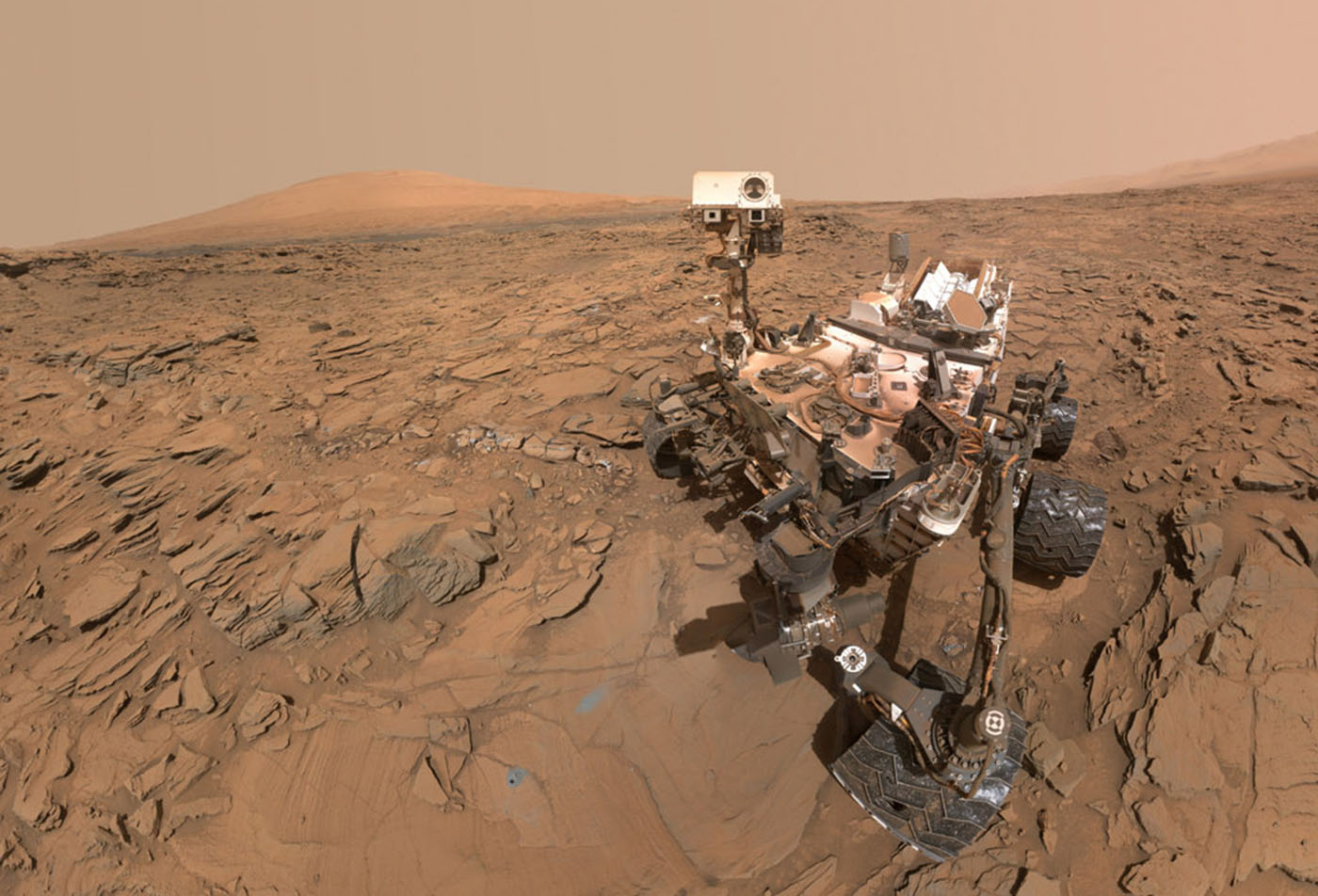
Curiosity awakens from nap to resume full operations


Curiosity is back to work on Mars after it shut itself down due to a software glitch on July 2nd. Even though tech support for the rover is nearly 60 million miles away, NASA scientists weren't too worried about the issue.
As suspected, the cause was found to be a "software mismatch in one mode of how image data are transferred on board." However, other means are available to transmit image data, so the team powered up the rover on July 9th and will simply avoid using the problematic mode.
Curiosity has gone into safe mode several times before, all back in 2013. However, the previous glitches were more serious, as NASA actually had to restore its software systems from a backup. The mission was recently extended for two years to let the robot make more breathtaking discoveries and hopefully even spot some water. It could be extended even further, but it's hard to say whether we'll get Opportunity-like endurance out of Curiosity. The nuclear-powered robot's plutonium-238 power supply could last up to 15 years, but it's likely that its batteries or other parts will break down first. Many scientists think that if it's still going when the Mars 2020 rover arrives on the red planet, that would be a great outcome.